.png?sfvrsn=ec06d8d_1)
Cybersecurity has become a core leadership responsibility for the food industry, not just an IT concern.
By Doug Baker, Vice President, Industry Relations, FMI
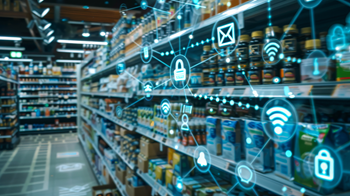 Cyber risk is no longer a technical issue that lives solely inside IT departments. It’s a leadership risk that directly affects business continuity, trust, and enterprise resilience. For food industry leaders, the question is no longer if cyber threats will touch operations, but when and how prepared the organization will be when they do. The recent Boardroom article by Oliver Wyman, "Treating Cyber Risks as a Business Problem," reinforces a reality many food industry leaders are already experiencing. Threats are becoming more persistent, organized, and intertwined with day-to-day operations.
Across the grocery value chain, digital systems now underpin everything from supply chains and payments to customer data and critical infrastructure. That interconnectedness has fueled efficiency and growth, but it has also dramatically expanded the industry’s exposure to cyber disruption. Treating cyber risk as a technical responsibility is no longer sufficient. Like food safety and physical security, cybersecurity now demands board-level attention, clear accountability, and sustained leadership engagement.
That recognition drove an important step by the FMI Board of Directors in September 2025, when it adopted the Board Policy Statement on the Food Industry’s Cybersecurity Commitment. The policy reflects a clear acknowledgment. In today’s operating environment, protecting systems, networks, and data is as essential as protecting people and customers. Cybersecurity is not optional, and it is not someone else’s problem.
The threats faced by our members are organized and constantly changing, with criminal groups targeting personal and corporate information for profit. Advanced persistent threats infiltrate silently and can go unnoticed for months or years. Insiders with authorized access may misuse data intentionally or accidentally. Hacktivists conduct overt attacks to express political or social messages. Additionally, some security researchers may cross ethical boundaries in pursuit of recognition or rewards.
What stands out in the Oliver Wyman analysis is the emphasis on preparation over prediction. Leaders cannot control who targets their organizations, but they can control governance, accountability, and readiness. That starts with board-level engagement and investment decisions aligned to risk. It also requires scenario planning, cross-functional coordination, and ongoing education.
Cyber risk will continue to evolve alongside our industry. Managing cyber risk effectively requires a proactive, multi-layered approach. Addressing it effectively demands leadership attention, shared responsibility, and a commitment to act before a crisis forces the issue. The future will reward organizations that treat cybersecurity not as a cost center, but as a foundational element of trust and resilience.
In its 11th publication, Boardroom, a joint FMI and Oliver Wyman publication, shares insights to help food industry leaders cut through complexity, understand patterns shaping technology, consumer shopping, loyalty, and workforce, and lead with greater clarity in a rapidly changing environment.
Read the Boardroom article, and share it with your team. We will be discussing safety & cybersecurity at the upcoming FMI Asset Protection & Grocery Resilience Conference, May 12-15, 2026, in Austin, Texas.
 Industry Topics address your specific area of expertise with resources, reports, events and more.
 Our Research covers consumer behavior and retail operation benchmarks so you can make informed business decisions.
 Events and Education including online and in-person help you advance your food retail career.
 Food Safety training, resources and guidance that help you create a company food safety culture.
 Government Affairs work — federal and state — on the latest food industry policy, regulatory and legislative issues.
 Get Involved. From industry awards to newsletters and committees, these resources help you take advantage of your membership.
 Best practices, guidance documents, infographics, signage and more for the food industry on the COVID-19 pandemic.
