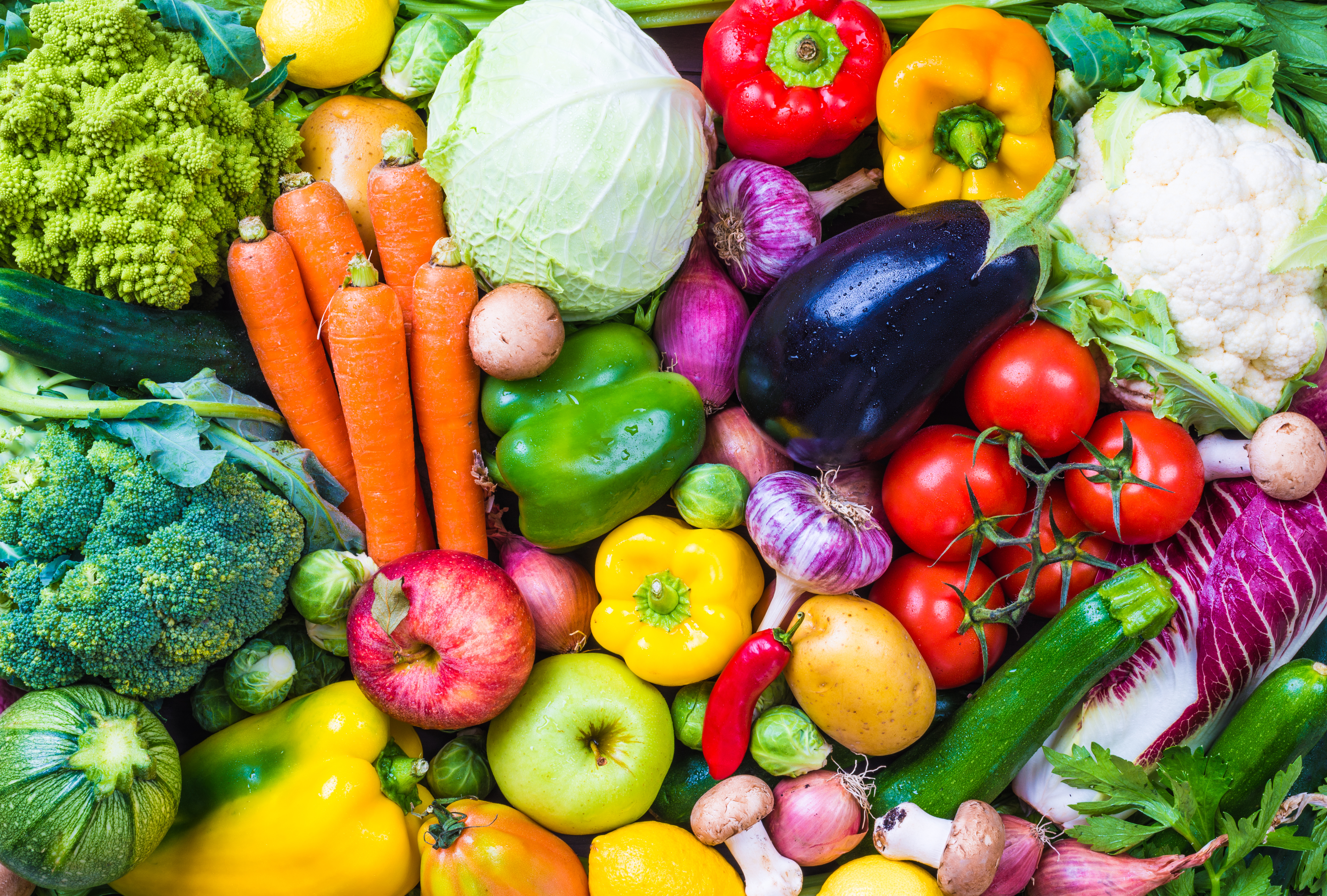

USDA forecasts point to relatively modest and more stable grocery inflation in 2026, but significant uncertainty remains due to ongoing pressures from labor, transportation, energy costs, weather risks, tariffs, and the evolving role of technology in the food supply chain.
By Andy Harig, Vice President, Tax, Trade, Sustainability and Policy Development, FMI
 As we head into 2026, questions remain about what the year holds for grocery prices, supply chains and affordability. To help gain some clarity, I recently sat down with Dr. Ricky Volpe, professor of agribusiness at Cal Poly, to unpack the latest USDA forecasts; the structural pressures still shaping food costs; the growing influence of weather, tariffs, and technology; and whether food price inflation is returning to a more predictable pattern—or entering a new, more complex normal.
Andy Harig: 2025 saw higher than average food price inflation but also a slow drift towards more stability. At a high level, what is the current outlook for food price inflation for 2026? Is this topic going to become “boring” once again?
Dr. Ricky Volpe: In late January, the USDA Economic Research Service updated the Food Price Outlook for 2026. The midpoint estimate predicts that grocery prices will increase by 1.7% in 2026, which would be below the 20-year average of 2.6% and would mean some relief, in terms of affordability, for many food and beverage items. But USDA uses ranges to forecast the CPI and the current forecast for the Food-at-Home CPI encapsulates a great deal of uncertainty. The estimate for inflation ranges from -2.3% to 6.0%, but historical patterns suggest that deflation is very unlikely. The width of this forecast range reflects uncertainty regarding rising energy costs, the potential implementation of new tariffs and their impacts on international trade, the ongoing impacts of tariffs in place on inputs such as metals and cardboard, and concerns over severe weather events. The current market outlook for the grains and oilseeds that form the foundation of the U.S. food system is largely deflationary, with experts predicting increased production and decreased farm prices. Barring the x-factors related to uncertainty, grocery prices should remain fairly stable with moderate inflation through 2026.
Harig: What structural pressures will have the most significant impact on food prices this year? For example, transportation costs have come off of their COVID-era highs, but that doesn’t mean that the underlying issue has gone away. We still don’t have enough drivers.
Volpe: Labor, transportation, and energy prices remain structural concerns for food prices. Electricity prices are expected to increase in 2026 due, in part, to the development and operation of energy-intensive data centers throughout the U.S. Labor remains a persistent issue throughout the food system, as food companies across nearly all industries continued to see turnover creep up as separations outpaced hirings. Until turnover at least stabilizes, I consider this a major concern for everything from planting and harvesting to stocking shelves in the supermarket. And truck transportation, particularly for long-haul routes and refrigerated cargo, remains very problematic. Truck rates continue to outpace economy-wide inflation, and this has a multiplicative effect on food prices, because trucking is the glue that holds the entire system together. There is effectively no segment in the food supply chain that does not rely on trucks, because even barges, carriers, and trains rely on trucks at the end points of their routes.
Harig: There is an old farmer’s adage that says, “A dry May and a leaking June make the farmer whistle a merry tune.” What do the recent cold temperatures in the East and drought out West mean for crop production and thus food prices?
Volpe: The cold and snowy winter in the East and Midwest are not major concerns for food prices, given the seasonality of production in those areas. At the margins, extreme cold, snow, and ice can slow down transportation and logistics. In the South, unusually cold winter weather such as frost snaps can decrease citrus yields. At the moment, I am concerned about the snowpack on the Sierra Nevada. Much of California’s growing regions, from Sacramento down to the San Joaquin Valley, has received normal rainfall amounts this winter, but the snow levels on Sierra Nevada are at less than half of where they should be at this point. As winter gives way to spring and temperatures warm, the snow and ice in the mountains gradually melt, providing runoff that irrigates farms throughout California for the coming growing season. There’s still time for more snow to fall, but if the levels remain depressed through the end of April, fruit and vegetable growers will be faced with less water or higher water rates, which could reduce yields and increase prices. Runoff is also crucial for the production of alfalfa, which is used to feed animals grown throughout the western U.S. for meat and dairy products.
As I noted earlier, every year weather is an “x-factor” for predicting food prices. The incidence of severe and unpredictable weather events that affect agricultural regions has been on the rise globally for at least the last two decades. Just this past year, we saw clear impacts of severe weather on the prices of coffee and sugar. It is likely that at least some CPI categories will be similarly impacted in 2026.
Harig: Beyond weather effects, are there specific commodities or issues (e.g., a resurgence in avian influenza) that we need to be keeping an eye on, and if so, why?
Volpe: I have my eye on fruits, vegetables, and meat products. The current precipitation levels in the West have the potential to result in decreased yields and higher input costs for California producers, and coupled with potential tariffs on imports, this will result in increased inflation for this category. With respect to meat, my number one concern is beef. Cattle inventories remain at historic lows, despite retail prices at or near all-time highs, even adjusting for inflation. Ranchers for cattle, and to a lesser extent hogs, are facing a great deal of uncertainty regarding their input costs and the prices they receive from downstream processors. Constricted supply and strong demand are a recipe for another year of stubbornly high meat prices, and another outbreak of the avian flu will result in higher prices for chicken and eggs.
Harig: The President’s tariffs have not had the effect that many people predicted, but that does not mean that they have not had any effect. Assuming we get the certainty and stability the industry has been calling for on this front, how do you see tariffs impacting food prices during 2026?
Volpe: In March and April of 2025, economists and business experts began sounding alarms about the current administration’s proposed tariffs and their potential impacts on consumer prices. I think it’s important to point out that the predictions about food prices specifically were not necessarily incorrect, and in fact may have been constructive, as many food-related tariffs were repealed, exempted, or reduced as the year played out. Looking forward, the administration continues to discuss potential tariffs with Canada, the EU, and other trading partners, which have the potential to drive up prices for fruits and vegetables, cheese, chocolate, spices, seafood, and many alcoholic beverages. But my biggest concerns are the tariffs currently in place for steel and aluminum. These metals are crucial to the U.S. food system and are used for packaging, storage, and nearly all capital equipment. The U.S. imports large shares of both from Canada and China, and both countries currently face 50% tariffs on these products. This increases the cost of doing business for food companies and I expect to see these costs tip food price inflation upward in 2026 via mechanisms not necessarily captured by the USDA forecasting methodology.
Harig: AI looks set to transform a lot of industries, and the food and agriculture supply chain is definitely in the mix of this discussion. How do you view the impact of AI – and/or technology more generally – on food prices and the agricultural supply? Are you a techno-optimist or are there risks we need to keep in mind?
Volpe: Overall, I am definitely an optimist. In the short term, AI and related technologies have the potential to increase energy prices, simply because the infrastructure required to power them are so energy intensive. But I think the benefits of broader AI adoption will outweigh the costs of implementation and that the net benefit to society will be unambiguously positive. Research in applied economics has already begun to demonstrate the impacts of AI adoption on factors such as total output, product quality, and food waste, and the needle is being moved in the right direction, and this is really only the beginning in terms of AI’s capabilities. Folks worry about AI taking jobs away from people, but I don’t see it that way. AI can automate and enhance many jobs and tasks for which labor sourcing is currently a pain point in the food system. Additionally, AI makes database creation and data analytics much easier, allowing food companies to gain valuable insights into demand forecasting and product formulation, creating efficiencies, reducing food waste, and improving operating margins.
Harig: Given the pressures we discussed, what ways are companies innovating to “future proof” the supply chain?
Volpe: The adoption and increased use of AI is a big one. This is already reducing labor costs, reducing waste and driving efficiencies from farms to supermarkets. Renewable energy continues to get cheaper and cheaper, and this reduces energy costs even further by reducing the dependence food companies have on crude oil, which has become very volatile in the last 15 years or so. Since COVID-19, both buyers and sellers in the supply chain have engaged in more flexible transactions, increasing their rolodexes and relying less on rigid contracts that create shortages in the event of unforeseen forecasts. And finally, traceability continues to become cheaper to execute throughout the supply chain, helping to smooth out kinks and bottlenecks as food travels from the farm to customers.
 Industry Topics address your specific area of expertise with resources, reports, events and more.
 Our Research covers consumer behavior and retail operation benchmarks so you can make informed business decisions.
 Events and Education including online and in-person help you advance your food retail career.
 Food Safety training, resources and guidance that help you create a company food safety culture.
 Government Affairs work — federal and state — on the latest food industry policy, regulatory and legislative issues.
 Get Involved. From industry awards to newsletters and committees, these resources help you take advantage of your membership.
 Best practices, guidance documents, infographics, signage and more for the food industry on the COVID-19 pandemic.
