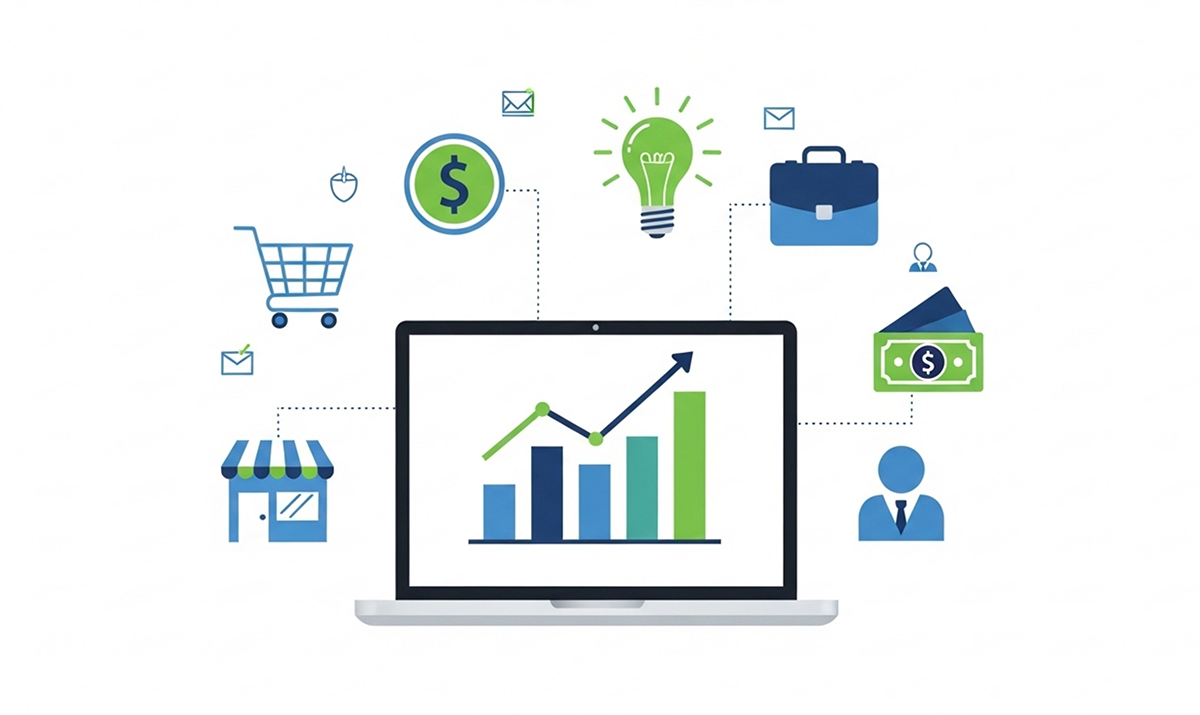
As Retail Media continues to grow, the food industry needs to define clear measurement standards that can demonstrate the incremental value of the investment.
By Mark Baum, Chief Collaboration Officer & Senior Vice President, Industry Relations, FMI
 About a year ago, FMI released The Evolution of Retail Media: Decoding What Works — And What Doesn’t, produced in collaboration with NielsenIQ and Think Blue. At the time, our goal was to help the industry make sense of a platform that was clearly accelerating beyond experimentation.
What we saw was unmistakable.
Retail Media Networks were no longer a niche tactic. They had become a strategic growth engine—driving performance-based returns, unlocking powerful consumer insights, and reshaping how brands and retailers work together. Forecasts pointed to CPG retail media spending reaching $26.6 billion by 2026, with grocery contributing roughly $6.7 billion. Within grocery, food departments alone were expected to command nearly 87% of that investment, reflecting how deeply retail media is already embedded in the omnichannel shopper journey.
Retail media had arrived.
Earlier this year, FMI built upon that work by introducing the six stages of Retail Media Network (RMN) maturity—a roadmap showing how RMNs evolve from basic monetization tools into fully integrated growth platforms. The industry response was clear: progress is occurring, and momentum is real.
But over the past several months, the conversation has shifted.
From Growth to Proof
Across the conversations we had in the FMI Retail Media Master Series, I’ve heard a consistent refrain from brand, retail, and agency leaders alike. Retail media performance looks strong, but it is increasingly being evaluated through a different lens.
Marketing and finance teams are now aligning around a common question: What is the incremental business impact of this investment?
That shift has brought two metrics to the forefront of executive conversations:
- Incremental Return on Ad Spend (iROAS): Incremental Sales ÷ Media Cost
iROAS focuses on sales that would not have occurred without advertising, helping teams distinguish true lift from demand that would have happened anyway. - Incremental Return on Investment (iROI): Incremental Profit ÷ Media Cost
iROI goes a step further by incorporating margin and cost, making it especially relevant for finance-led budget decisions.
These metrics are gaining traction because they translate retail media performance into a language both marketing and finance agree and act on. They reflect a broader reality: retail media is no longer judged solely on activity or attribution, but on its ability to prove incremental value.
Why FMI, Why Now
As retail media matures, measurement, not inventory, formats, or innovation, has become the primary constraint on its next phase of growth. Inconsistent definitions, uneven methodologies, and limited comparability make it harder to build confidence, scale investment, and measure returns.
This is not a challenge any single retailer, brand, or partner can solve alone.
Part of FMI’s role is to convene the industry around the shared questions that must be answered, so standards are developed and finalized and before confidence erodes further. That work begins with open dialogue among senior leaders at the FMI Midwinter Executive Conference, where the industry will come together to explore what retail media measurement must become to sustain growth.
During the Midwinter Conference, we will be exploring and discussing why Retail Media needs a new measurement standard. We invite you to be a part of the conversation and solution.
 Industry Topics address your specific area of expertise with resources, reports, events and more.
 Our Research covers consumer behavior and retail operation benchmarks so you can make informed business decisions.
 Events and Education including online and in-person help you advance your food retail career.
 Food Safety training, resources and guidance that help you create a company food safety culture.
 Government Affairs work — federal and state — on the latest food industry policy, regulatory and legislative issues.
 Get Involved. From industry awards to newsletters and committees, these resources help you take advantage of your membership.
 Best practices, guidance documents, infographics, signage and more for the food industry on the COVID-19 pandemic.
