

The federal government quit minting pennies over the summer, creating confusion and operational challenges for grocers and customers. Food retailers rely on pennies to make exact change for cash-reliant customers and need clarity from the federal government.
By Christine Pollack, Vice President, Government Relations, FMI
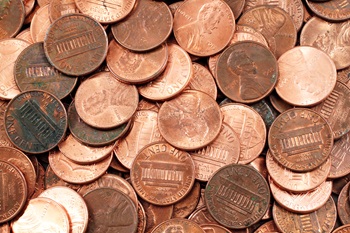
In June, the U.S. Mint, very quietly and with no fanfare, minted the last pennies. This final minting was done at the demand of the U.S. Treasury Department which was following a directive from President Trump.
While a knee-jerk reaction could be to insert a dad joke here or a comment about “nobody uses pennies anymore,” unfortunately, the reality of the situation is more complicated and serious. The federal government did not give any thought to or plan for how stopping the minting of the penny would impact grocery customers, services in our stores, and our nation’s interstate commerce.
Cash is still used in grocery stores of all sizes around the country. Providing our grocery customers with the ability to use cash for purchases is an important service and the law in several states and localities. There is a myriad of operational, legal and compliance issues that grocers and other retailers are facing because the federal government has ceased minting the penny.
Not only do grocers accept cash at the register and need coins, including pennies, to make change, but they also need coins to operate self-checkout stations and vending machines, and to cash checks. Many grocery stores offer check-cashing services to customers and employees. Under federal law, checks must be cashed to the exact penny.
The final inventory of pennies was sent to Federal Reserve regional distribution vaults in the summer and since September, this inventory has decreased dramatically. As of today, 95 of the 165 Federal Reserve vaults have suspended penny ordering and/or depositing. This means that retailers across the country are not receiving an adequate supply of pennies to make exact change to cash-paying customers in stores.
This permanent disruption in inventory of the 1-cent coin is beginning to cause a cascade of negative events in stores across the country. Without exact change, stores have no choice but to round to the nearest nickel on the total or change for cash-paying customers.
FMI is acutely concerned about how rounding for cash transactions could pose serious implications for Supplemental Nutrition Assistance Program (SNAP) retailers including possible exposure to litigation and potential violation of the SNAP equal treatment provisions. The SNAP equal treatment provisions prohibit both negative treatment and preferential treatment toward SNAP participants. Without exact change, grocery stores have no choice but to round on the total or change to the nearest nickel for cash-paying customers, meaning these customers would be paying a slightly different total than SNAP customers who use a SNAP EBT card for purchases.
Grocery stores and other merchants need critical guidance and changes in law now from federal, state and local governments to address the growing lack of pennies in circulation. FMI and our member companies, and state and national association partners are calling on all levels of government to act swiftly on the following:
- U.S. Treasury Department: Issue guidance officially notifying businesses and the public about the ceased minting of the 1-cent coin and provide additional directives on how to proceed with cash transactions and the use and deposit of pennies.
- U.S. Department of Agriculture: Issue guidance to provide SNAP retailers with flexibility under the SNAP equal treatment provisions.
- U.S. Congress: Enact a federal law that will allow businesses to round cash transactions to the nearest nickel; ensure rounding for cash customers does not violate terms of SNAP; and facilitate check cashing at retail locations.
- State and Local Governments: Issue guidance and/or modify laws regarding tax collection and transmission, minimum pricing, price accuracy, and deceptive trade practices.
As FMI noted in a blog a few years ago when the pandemic was compounding our nation’s coin shortage, the public can help by taking coin out of your house, car, and office and spend, donate, or redeem it. The penny is a valid U.S. currency and will remain so. Please help make cents of the situation by using your pennies and other coins!
 Industry Topics address your specific area of expertise with resources, reports, events and more.
 Our Research covers consumer behavior and retail operation benchmarks so you can make informed business decisions.
 Events and Education including online and in-person help you advance your food retail career.
 Food Safety training, resources and guidance that help you create a company food safety culture.
 Government Affairs work — federal and state — on the latest food industry policy, regulatory and legislative issues.
 Get Involved. From industry awards to newsletters and committees, these resources help you take advantage of your membership.
 Best practices, guidance documents, infographics, signage and more for the food industry on the COVID-19 pandemic.
