Quality, Relevance, Experience and Convenience are Key Factors in Decision-Making
ARLINGTON, VA — The latest survey of grocery shoppers by FMI – The Food Industry Association for its U.S. Grocery Shopping Trends 2023 series, reveals that the meaning of "good value” is becoming more complex as consumers navigate grocery aisles.
The analysis revealed several common considerations for how shoppers think about value, both for the food and 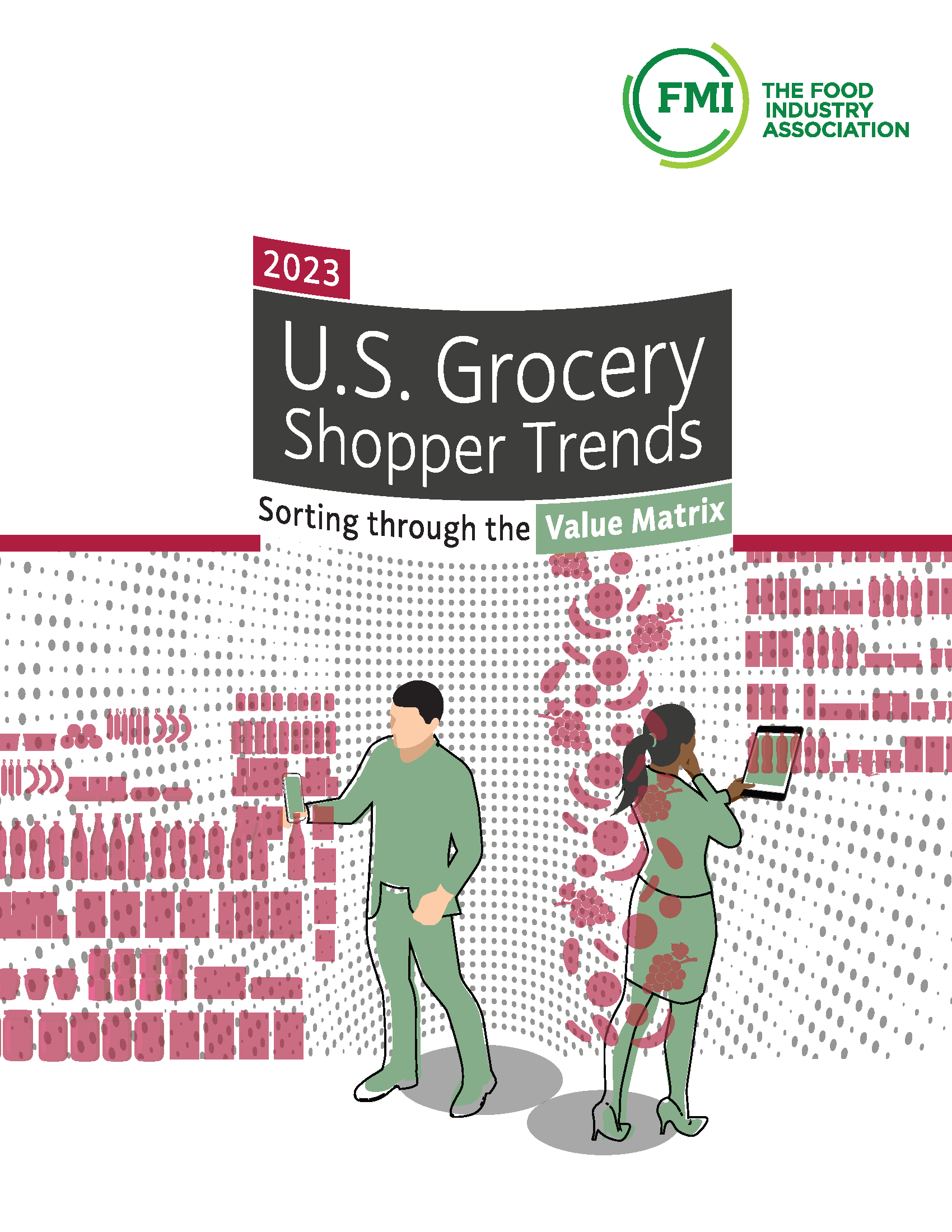 beverages they buy and the stores and channels they choose to shop, as inflation, while slowly edging downward in April, persists. Emerging dimensions of value regarding quality, relevance, experience and convenience are bucking the long-held definition of value being measured by a simple equation of higher quantity at a lower price.
“Understanding how dramatically grocery shoppers are expanding their definition of value is imperative for the food industry as consumers adjust their purchasing patterns and habits amid continued economic uncertainty,” said Leslie G. Sarasin, president and CEO of FMI. “This report highlights that price is not necessarily the be-all-end-all when it comes to shopper perceptions of value, and also that the notion of value itself has become an increasingly more complex, subjective, and even personal calculation.”
While shoppers say that getting good value is a priority across all income and demographic levels, younger shoppers are clearly driving the shifting definition of value toward a more holistic measurement that goes beyond the traditional price-to-quantity ratio. Demographic explorations within the report revealed, for example:
- At 62%, millennials increasingly say they prefer to minimize food waste by buying only what they need, a strategy that speaks to relevance.
- Convenience and a pleasing shopping experience are also key drivers of value for younger shoppers: 47% of millennials say that they are willing to spend more money to avoid shopping at multiple stores, while 50% say they would spend more to shop at more pleasant stores, compared to just 16% of Baby Boomers who express those sentiments.
- Younger shoppers are also more willing to buy the best quality items regardless of price. Fifty-two percent of millennials and 42% of Gen Z-ers express that sentiment, compared to just 22% of Baby Boomers.
Among the 75% of shoppers expressing concern with rising food prices, two strategies are being utilized consistently across all income levels – increased deal seeking and 41% of shoppers who are purchasing more store brands. Sarasin said, “There is a perception that shopping in-store is the best method for getting good value. This belief is shared across all generations, although younger shoppers are more flexible and more likely to see value in both online and in-store shopping, depending on the situation.”
For Media:
Members of the media may contact FMI for a gratis copy of the 2023 Grocery Shopper Trends, Value Matrix report.
 Industry Topics address your specific area of expertise with resources, reports, events and more.
 Our Research covers consumer behavior and retail operation benchmarks so you can make informed business decisions.
 Events and Education including online and in-person help you advance your food retail career.
 Food Safety training, resources and guidance that help you create a company food safety culture.
 Government Affairs work — federal and state — on the latest food industry policy, regulatory and legislative issues.
 Get Involved. From industry awards to newsletters and committees, these resources help you take advantage of your membership.
 Best practices, guidance documents, infographics, signage and more for the food industry on the COVID-19 pandemic.
