Web experience shows how changes in the supply chain influence food prices in the aisles
ARLINGTON, VA—FMI—The Food Industry Association today releases a web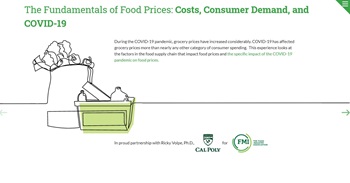 experience that explains how the COVID-19 pandemic has affected grocery prices more than nearly any other category of consumer spending. In April, the Consumer Price Index for food at-home posted its largest monthly increase since February 1974 and grocery prices are up 5.6% for the period June 2019 to June 2020.
“The food industry is sensitive to the fact that American consumers remain highly concerned about COVID-19 and food sourcing – but appear to be acquiring more confidence,” shared Leslie G. Sarasin, president and CEO of FMI. “This web experience is designed to educate the public, so grocery shoppers better understand how food prices are determined and how the COVID-19 shock to the supply chain affected food prices.”
The website, FMI.org/FoodPrices, is based on insights from The Fundamentals of Food Prices: Costs, Consumer Demand and COVID-19, prepared for FMI by Ricky Volpe, Ph.D., associate professor for Cal Poly in San Luis Obispo, CA. The report finds the COVID-19 pandemic caused four major changes that impacted food prices in a short period of time:
- A rapid shift to eating at home.
- The loss of foodservice demand.
- An increase in production and processing costs.
- An increase in operating costs for grocery stores.
Sarasin shared, “Our research indicates there will continue to be a higher level of retail-sector food spending for the foreseeable future as home cooking displaces spending on foodservice. However, grocery shoppers can rest assured that cost increases are not related to increased profits, and instead result from a spike in expenses due to labor, lower capacity production, cleaning and sanitation protocols and even transportation demands.”
The web experience and report are accompanied by a webinar series for the food industry to dive deeper into understanding the economics of food prices. Resources are also available to help shoppers who face food insecurity to connect to federal assistance programs including the Supplemental Nutrition Assistance Program (SNAP) and the WIC program. Learn more at FMI.org/FoodPrices.
 Industry Topics address your specific area of expertise with resources, reports, events and more.
 Our Research covers consumer behavior and retail operation benchmarks so you can make informed business decisions.
 Events and Education including online and in-person help you advance your food retail career.
 Food Safety training, resources and guidance that help you create a company food safety culture.
 Government Affairs work — federal and state — on the latest food industry policy, regulatory and legislative issues.
 Get Involved. From industry awards to newsletters and committees, these resources help you take advantage of your membership.
 Best practices, guidance documents, infographics, signage and more for the food industry on the COVID-19 pandemic.
