Increases in food prices are driven by dozens – if not hundreds – of factors, and the unprecedented demand challenges we’re witnessing in the food supply chain as a result of COVID-19 has affected the prices of some products in the grocery store. Grocery shoppers can rest assured that a cost increase is not related to increased profits, and instead due to a spike in costs due to labor, lower capacity production, cleaning and sanitation protocols and even transportation demands. These examples are a few to help contextualize environmental factors that influence food prices, all while the grocery industry maintains a net 1-2% profit margin, which has been consistent for more than two decades.
Due to COVID-19, grocery shoppers may witness temporary increases on prices of certain commodities. Regarding meat, for instance, in order to maintain social distancing practices many manufacturing lines have had to increase the spacing of personnel working the production, packaging and warehousing functions. This generally results in lower production rates per employee, and longer production timeframes to produce the same amount of product as supplied pre-pandemic. Additionally, increased demand and reduced supply from hard-hit regions have also reduced the ability of manufacturers to get necessary materials, such as packaging, and has resulted in sourcing of higher cost materials and less opportunity for bulk buying.
Grocers are sensitive to the fact that American consumers remain highly concerned about COVID-19 and food sourcing, but appear to be acquiring more confidence in their ability to cope in this environment. According to FMI U.S. Grocery Shopper Trends COVID-19 tracker, this lower level of concern is reflected in weekly grocery spending for the household, which has dropped closer to normal levels – $139 week of April 25 vs. $161 in late March.
FAQ on Price Increases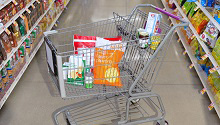 Industry Topics address your specific area of expertise with resources, reports, events and more.
 Our Research covers consumer behavior and retail operation benchmarks so you can make informed business decisions.
 Events and Education including online and in-person help you advance your food retail career.
 Food Safety training, resources and guidance that help you create a company food safety culture.
 Government Affairs work — federal and state — on the latest food industry policy, regulatory and legislative issues.
 Get Involved. From industry awards to newsletters and committees, these resources help you take advantage of your membership.
 Best practices, guidance documents, infographics, signage and more for the food industry on the COVID-19 pandemic.
